



Successful Cases



Applewhite
An Austin Product Liability Attorney Who Knows How Insurers Build Their Defense
A product failure rarely announces itself as a lawsuit. It's a phone that overheated, a tool that kicked back, a part that gave out on the highway, and only afterward does the person it happened to start wondering whether the company behind it should have caught the problem first.
I'm Ashley Applewhite, a product liability lawyer in Austin, TX. Before I represented injured people, I spent years on the other side, at law firms that defend insurance companies and the businesses they cover. I watched those files get built: which details get seized on, which gaps get exploited, which claims get written off before anyone really looks at them. Now, I use what I learned from that work for the people injured by these very products and companies.
Call my office, and you reach me, not a call center and not a rotating cast of case managers. I'll tell you plainly whether the facts support a product liability claim, and just as plainly if they don't; either way, you won't be pushed toward a decision you're not ready to make.





Product Liability in Austin and Texas
Austin's growth means more products moving through more hands, including more warehouses and manufacturing on the county's east side, and more delivery fleets on I-35 and MoPac. Under Texas Civil Practice and Remedies Code Chapter 82, a product liability claim can rest on strict liability. That means you usually don't have to prove anyone was careless, but only that the product reached you with a defect that made it unreasonably dangerous when used as intended, and that the defect caused your injury.
Not every product failure creates a claim against every company in the chain. Under Texas’s innocent-seller rule in Section 82.003, a store or distributor that didn’t make the product is usually not liable, so responsibility typically rests with the manufacturer. A seller can still be held responsible in specific situations, such as when it helped design or altered the product, knew about the defect, made an incorrect claim about the product that you relied on, or when the manufacturer is insolvent or can’t be brought into a Texas court.
Were You or a Loved One Hurt by a Defective Product in Austin
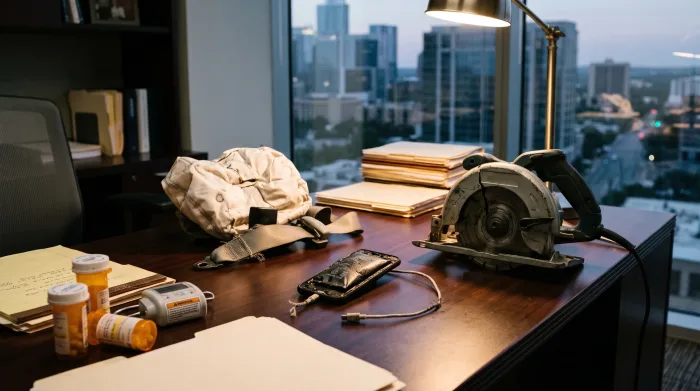
Product liability claims get complicated fast. More than one company can share responsibility for a single defect: the manufacturer that designed it, a supplier that built a faulty component, a distributor that never caught a bad batch, a retailer that sold it. Insurance policies from each of those parties can overlap, conflict, or point in different directions. And the manufacturer's own insurer starts building its side of the story almost immediately, often before you've finished your first round of treatment.
A personal injury lawyer sorts that out for you. I identify who actually shares responsibility, give you a realistic read on what your situation may be worth, and handle the conversations with insurers so you don't have to.
Common Defective Product Cases I Handle in Austin
As an Austin-based product liability attorney, I see defective product injuries fall into a handful of recurring patterns, including failed vehicle components, faulty electronics, unsafe industrial equipment, and dangerous medications or devices.
Vehicle Part and Airbag Defects
An airbag that didn't fire, a seatbelt that gave way, a tire that came apart at speed are all failures that can support two separate claims: one against the driver who hit you, and one against the company that built the part meant to protect you. Proving a component defect takes engineering analysis and crash reconstruction, which is why I fund that work upfront rather than pass on these cases.
Lithium-Ion Batteries and Consumer Electronics
Phones, e-bikes, power banks, and laptops can swell, ignite, or blow apart when they're poorly made. If a device gave you burn injuries, hold on to the device, the charger, and the box, as each can help show what went wrong, even if the store or your phone carrier asks you to return it.
Industrial Equipment and Workplace Machinery
A press, saw, lift, or power tool that hurt you on the clock, workers’ comp may cover part of your losses if your employer carries it. Either way, you can still bring a separate claim against the outside company that designed or built the defective machine. If your work injury traced back to a faulty tool, that second claim deserves its own look.
Medications, Medical Devices, and Household Chemicals
These cases usually turn on which kind of defect is in play: a design that was dangerous from the start, a manufacturing flaw in your specific unit, or a warning label that never disclosed a known risk. Which one fits shapes the whole claim.
What a Product Liability Claim Can Recover

A product liability settlement isn't limited to your hospital bill from the day it happened. Depending on how serious the injury is, a claim can include:
- Medical costs, both what you've already spent and treatment you'll still need going forward.
- Lost wages, plus any lasting hit to what you're able to earn if the injury affects your work long-term.
- Physical pain and the toll the injury has taken on your day-to-day life.
- Permanent scarring, disfigurement, or disability, where that applies.
- Wrongful death damages for surviving family, when a defective product proves fatal.
What your claim is realistically worth depends on the severity of the injury, how much insurance or corporate coverage stands behind the responsible companies, and how clearly the evidence ties the defect to your injury. Part of my job is also negotiating down what medical providers claim from the settlement, so the recovery isn't swallowed before it reaches you. A free consultation gets you an honest number instead of a guess.
What You Have to Prove in a Texas Product Liability Case
A manufacturer or seller isn't automatically responsible every time its product causes harm. They're responsible when a real defect made the product unreasonably dangerous, and that defect caused your injury. To win a product liability case, I generally have to prove four things:
- Defect: The product left the manufacturer, distributor, or seller with a design flaw, a manufacturing flaw, or an inadequate warning. For a design defect, Texas also requires proof that a safer alternative design existed: one that was practical and affordable when the product was made and would have prevented or significantly reduced the injury without making the product less useful.
- Unreasonably dangerous: The defect made the product unreasonably dangerous when used as intended.
- Causation: The defect must have been a producing cause of your injury.
- Damages: You suffered an injury or loss as a result.
A successful claim can require the responsible companies to pay for those losses in full.
Not Sure Where You Stand? Let's Find Out Together.
You don't need to know whether you have a lawsuit before you call. Tell me what happened, and I'll walk you through what the facts show before any evidence gets lost.
What Steps Should You Take After a Defective Product Injury
If a defective product hurt you, here's what protects your options:
- Preserve the product: Don't repair it, discard it, or return it because it’s the single strongest piece of evidence you have.
- See a doctor: Any delay gives the insurer room to doubt your injury.
- Take photos: Capture the product, the packaging, and the scene before anything changes.
- Keep everything: Save the box, receipts, the manual, and any warranty cards.
- Write it down: Record exactly what happened while it's still fresh.
- Get witnesses: Collect names and contact info from anyone who saw it happen.
- Say little to insurers: Skip recorded statements until you've talked with a lawyer.
None of this means hiring me. It just keeps your options open while you decide.
How Long You Have to File in Texas

Under Texas Civil Practice and Remedies Code § 16.003, you generally have two years from the date of your injury to file a product liability lawsuit. A separate statute of repose under Section 16.012 generally bars a product claim against a company once fifteen years have passed since that company sold the product, even if you were hurt only recently. Limited exceptions apply, including for products sold with a longer written warranty and for certain latent diseases. Miss either window, and you typically lose the right to recover no matter how strong the underlying case was. In a wrongful death case, the clock usually starts on the date of death, and different rules can apply to children.
Texas also follows a modified comparative fault rule. Under Section 33.001, you can still recover as long as a jury finds you 50% or less at fault, and under Section 33.012, your compensation is reduced by your percentage of fault. That's one reason it helps to have an experienced product liability attorney review the facts early, before the other side shapes the story on their own.
Why Austin Clients Choose This Product Liability Attorney
- Direct access, not a hand-off. You work with me from the first call through resolution, with no rotating staff, no case managers standing between you and your attorney.
- An insider's read on the defense. Years on the insurance-defense side mean I know how manufacturers and their carriers build a denial before they send it.
- I fund the investigation. Product cases often need engineering analysis or crash reconstruction to prove a defect. I pay those costs upfront, so money never decides whether your case gets built.
- No fee unless I win. Every product liability case I take is on a contingency basis, so you owe nothing unless I recover compensation for you.

Not Sure You Have a Case? Let's Talk.
You don't have to decide anything today except whether to ask. I'll give you an honest read on where you stand, with no pressure and no obligation.
Find Out How Applewhite Law Firm Can Help You and Your Family
A free consultation gives you a straight read on where your case stands and what it could realistically be worth, with no pressure to move forward. If I take your case on, you owe nothing upfront and nothing at all unless I recover money for you. Contact Austin product liability lawyer Ashley Applewhite at the Applewhite Law Firm to start your claim today.