Average Slip and Fall Settlement Amounts in Texas

After a slip and fall accident in Texas, the first concern is often straightforward: how much money will you get, and how is it determined?
As an Austin slip and fall attorney with extensive experience handling premises liability claims, I assess slip and fall cases with a clear view of how liability and damages are evaluated. Settlement amounts for slip and fall injuries can range from $5,000 to over $1 million and largely depend on documentation of injuries, medical expenses, lost wages, and how Texas law assigns fault.
Slip and Fall Accidents in Texas: Statistics, Laws, and Real-World Context
Slip and fall accidents are a leading cause of injury-related emergency room visits across the United States. According to data from the Centers for Disease Control and Prevention, falls account for more than 8 million emergency room visits annually, making them one of the most frequent reasons people seek emergency medical care.
Texas mirrors these national trends. Falls remain a top cause of nonfatal injuries requiring medical treatment, particularly among adults over age 40 and workers in retail, construction, hospitality, and healthcare settings.
From a legal standpoint, slip and fall cases in Texas fall under premises liability law. Property owners and occupiers owe a duty of care to lawful visitors, depending on the visitor’s legal status. Texas courts apply these duties through established case law and statutes, including:
- Texas Code §33.001–33.017 (proportionate responsibility / modified comparative negligence)
- Texas Code §16.003 (statute of limitations for personal injury claims — two years)
These laws directly affect slip-and-fall settlement amounts in Texas, particularly when insurers argue that the plaintiff bears some fault.
What Is the Average Settlement Amount for Slip and Fall Cases in Texas

There is no fixed settlement amount for slip and fall cases in Texas. Compensation depends on injuries sustained, proof of negligence, and available insurance coverage. That said, settlement ranges tend to fall within identifiable brackets.
Typical slip and fall settlement ranges in Texas include:
- $5,000 to $25,000: Minor injuries without surgery, limited medical treatment, and short recovery periods;
- $25,000 to $100,000: Moderate injuries such as fractures, herniated discs, or extended physical therapy;
- $100,000 to $500,000: Serious injuries requiring surgery, long-term care, or causing permanent limitations;
- $500,000 to $1,000,000+: Severe injuries involving traumatic brain injuries, spinal cord injuries, or permanent disability.
Claims involving slip-and-fall settlements without surgery in Texas often settle in the lower to mid-range, depending on documented medical expenses, lost wages, and the strength of the liability evidence.
Insurance companies rarely offer fair compensation without detailed proof. Medical records, incident reports, photographs, witness statements, and expert testimony often determine where a settlement ultimately lands.
Injuries in Slip and Fall Accidents and Their Associated Risks
Slip and fall injuries range from minor soft tissue damage to catastrophic trauma. Settlement value rises as injury severity and long-term impact escalate.
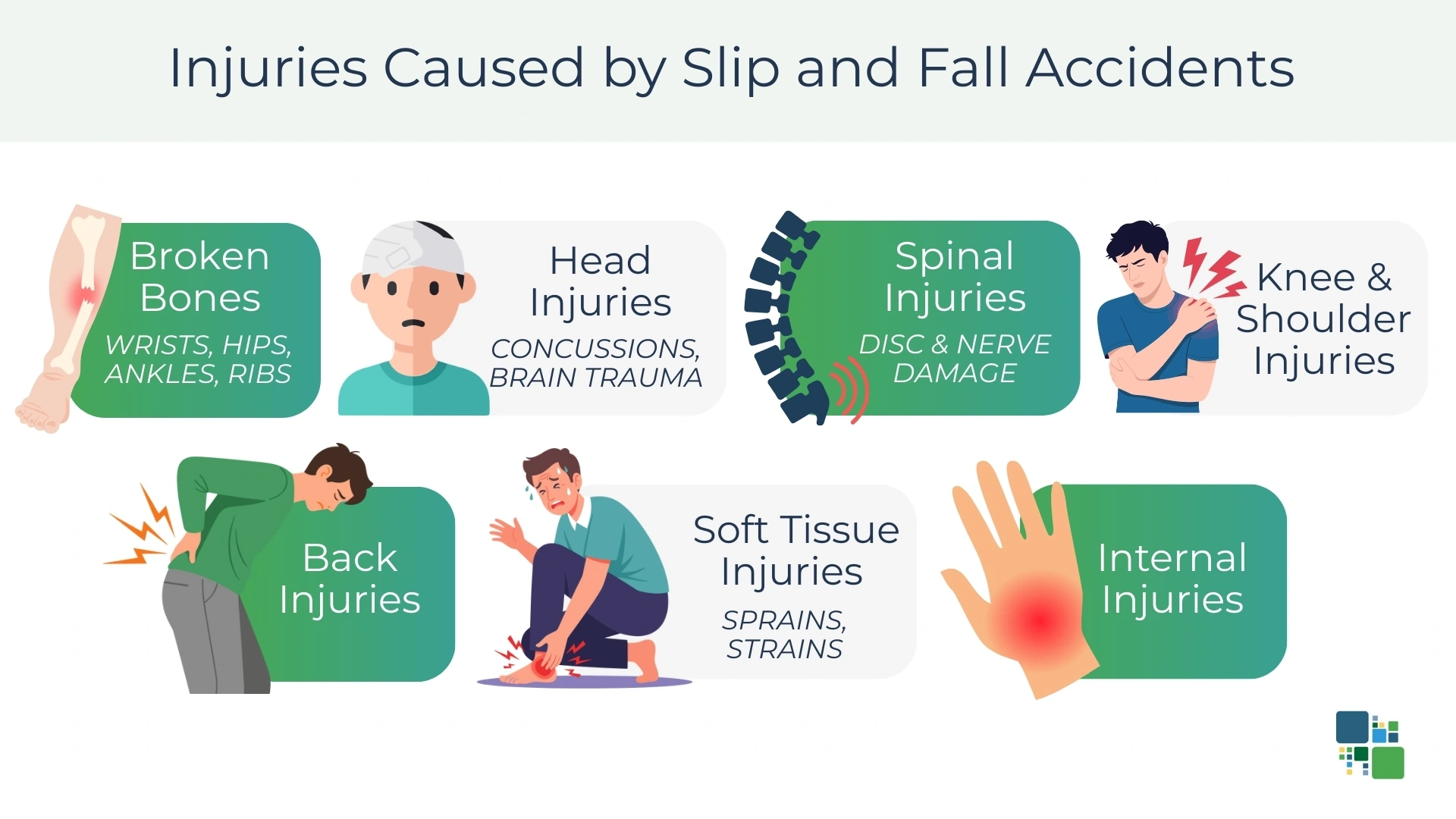
Common slip and fall injuries include:
- Broken bones, including wrists, ankles, hips, arms, and ribs
- Head injuries, including concussions and traumatic brain injuries
- Spinal cord injuries, disc herniations, and nerve damage
- Knee and shoulder injuries, including ligament tears
- Back injuries requiring injections or surgery
- Soft tissue injuries, such as sprains and strains
- Internal injuries following high-impact falls
Falls involving head injury or spinal trauma often require extensive medical treatment, physical therapy, diagnostic imaging, and follow-up care. These injuries result in higher medical costs, longer recovery periods, and an increased risk of permanent impairment. As a result, they typically produce higher fall settlement amounts than cases involving minor injuries without surgery.
Factors Affecting Slip and Fall Case Payouts in Texas
Several factors influence slip and fall settlement amounts in Texas. Insurers and defense attorneys evaluate these issues early and continuously throughout the claim.
Severity of Injuries
More serious injuries result in higher medical expenses, longer recovery times, and increased financial compensation. Head injuries and spinal cord injuries significantly raise settlement value.
Medical Expenses and Treatment Duration
Documented medical bills, future treatment needs, rehabilitation costs, and prescription expenses play a central role in settlement valuation.
Lost Wages and Earning Capacity
Time missed from work and reduced ability to earn income directly affect economic damages in a personal injury claim.
Evidence of Property Owner Negligence
Proof that the property owner knew or should have known about a dangerous condition is essential. Surveillance footage, maintenance records, inspection logs, and prior complaints carry substantial weight.
Modified Comparative Negligence Rule
Texas law applies a 51% bar rule under its modified comparative negligence system. If an injured person is found more than 50% responsible, recovery is barred. Partial fault reduces compensation proportionally.
Insurance Policy Limits
Many slip and fall settlements are constrained by business liability insurance coverage limits. Commercial policies vary widely depending on property type and ownership structure.
How to File a Slip and Fall Lawsuit in Texas: Necessary Evidence and Legal Steps
Slip and fall cases require structured documentation and timely legal action. Evidence often disappears quickly, making early action essential.
Key steps in a slip and fall claim include:
- Seek medical treatment immediately: Medical records create a direct link between the fall accident and injuries sustained.
- Report the incident: Incident reports filed with property owners or managers establish a formal record.
- Preserve evidence: Photographs, videos, witness contact information, and footwear worn at the time of the fall may become critical.
- Request surveillance footage: Many commercial properties record incidents, but footage is often deleted within days.
- Document lost wages and expenses: Pay stubs, tax records, and employer statements support economic damage claims.
- File a claim or lawsuit within the Statute of Limitations: Texas allows two years from the date of injury to file a personal injury lawsuit.
Insurance companies typically challenge liability early. Legal representation often becomes necessary when insurers deny claims, dispute the extent of injuries, or minimize settlement offers.
How to Maximize a Slip and Fall Settlement in Texas
Slip-and-fall settlement value increases when a claim is framed to create risk for the insurer. That leverage comes from deliberate actions that strengthen liability, damages, and negotiation posture under Texas law.
Actions that help increase slip and fall settlement amounts include:
- Building a continuous medical record that clearly ties injuries and symptoms to the fall over time.
- Locking in liability evidence early so that dangerous conditions and notice cannot be disputed later.
- Positioning the case to minimize shared fault by addressing visibility, footwear, lighting, and warning arguments in advance.
- Documenting the full financial impact of the injury, including income loss and work limitations.
- Including future medical needs and lasting effects in settlement valuation, not just past treatment.
- Waiting to negotiate until damages are fully defined, rather than accepting early, incomplete offers.
- Maintaining litigation readiness to increase insurer exposure and settlement pressure.
Settlement outcomes tend to improve when these actions are taken deliberately and in sequence, rather than reactively.
Who Is Ultimately Responsible for a Slip and Fall Accident

Responsibility in a slip and fall case depends on who controlled the property and the injured person’s legal status at the time of the fall.
Potentially responsible parties include:
- Commercial property owners
- Retail stores and grocery chains
- Apartment complexes and landlords
- Hotels and resorts
- Construction companies
- Property management companies
- Government entities are subject to notice requirements
Texas law distinguishes between invitees, licensees, and trespassers. Most slip and fall claims involve invitees, such as customers, tenants, or other legally permitted persons on the property. Property owners owe invitees a duty to inspect, correct dangerous conditions, or provide adequate warnings.
Failure to address hazards such as wet floors, uneven walkways, poor lighting, loose flooring, or unmarked spills may establish liability under Texas premises liability law.
How Long Does It Take to Settle a Slip and Fall Claim in Texas
Settlement timelines vary depending on injury severity, medical recovery, and dispute complexity.
General timelines include:
- 3 to 6 months: Minor injury cases with clear liability and limited medical treatment;
- 6 to 18 months: Moderate injury cases involving ongoing treatment or disputed fault;
- 18 months or longer: Serious injury cases requiring surgery, expert testimony, or litigation.
Settling too early can result in inadequate compensation, particularly when future medical needs are uncertain. Final settlement often occurs after maximum medical improvement is reached and damages can be accurately calculated.
Securing Financial Recovery After a Fall
Slip and fall settlement amounts in Texas do not have to feel uncertain or unpredictable. While every case turns on its own facts, compensation follows identifiable patterns based on injuries, medical costs, liability evidence, and Texas premises liability law.
I have spent years handling premises liability cases across Texas and working directly with insurance carriers. That background provides clear insight into how slip and fall claims are evaluated, challenged, and resolved. Whether a fall resulted in minor injuries or serious harm requiring ongoing treatment, a structured legal review helps clarify potential outcomes.
If you were injured in a slip and fall accident on someone else’s property, Applewhite Firm PLLC offers free consultations to review liability, damages, and available legal options under Texas law — contact us today.
Settlement Strategy Starts with Accurate Evaluation
Contact Applewhite Firm PLLC to review liability, damages, and insurance exposure.
Call For Your Free Case Review
Take the first step toward recovery. I'll personally evaluate your case with no obligation!
.avif)
Know Where Your Claim Stands
Premises liability claims move on evidence and timing. Reach out for a focused review and next steps.