

Texas Modified Comparative Negligence: How Fault Affects Your Claim
After a car accident in Austin, most people jump straight to one question: who caused this? Texas law rarely gives a clean, single answer. Under Texas modified comparative negligence, fault gets split between the parties involved, and how that split shakes out directly controls how much money you can actually recover.
That rule shapes every injury claim in the state. I've spent years on both sides of personal injury cases, first representing insurance carriers and now fighting for injured Texans. Insurance companies build their entire claims strategy around this law. If you don't know how it works, you're walking into a negotiation they've already prepared for.
The 51% Rule in Plain Terms
Texas follows a modified comparative fault system under Chapter 33 of the Texas Civil Practice and Remedies Code. The idea is that accidents are rarely caused by one person acting alone. When more than one party bears some responsibility, the law assigns each of them a percentage of fault and adjusts the damages accordingly.
Let's say your total damages, including medical bills, lost wages, pain and suffering, come to $100,000. If a jury determines you were 20% at fault for the accident, your award gets reduced by that same percentage. You'd recover $80,000.
That's the system working as intended. Now here's where it gets serious.
If your percentage of fault reaches 51% or higher, Texas law bars you from recovering anything at all. Not a reduced amount. Nothing.
That's the 51% bar, and it's not a technicality buried in fine print. It's the threshold insurance companies are constantly working to push you over.
Why Insurance Adjusters Care So Much About This Law

When I worked in insurance defense, I watched how claims were built. Adjusters don't wait to see how fault shakes out on its own; they work to shape the narrative from day one to help their bottom line, not yours.
The goal is simple: get your fault percentage as high as possible. At 20%, they reduce their payout by $20,000. At 51%, they walk away owing you nothing.
A few tactics you should know about:
The early recorded statement. Shortly after your accident, the other driver's insurer calls to "gather information." That call isn't casual. What you say about your speed, your attention level, whether you saw the other vehicle coming, all becomes part of the record. Statements made in those first conversations have shown up in trials against the very people who gave them.
Social media. A photo of you out with friends two weeks after the accident? That's Exhibit A for the argument that your injuries weren't serious. A post saying "getting around better this week" can be twisted into something that contradicts your medical records. Every public post is fair game.
Pre-existing conditions. If you've ever been treated for back pain, neck stiffness, or any complaint near the site of your current injury, insurers will find it. The argument becomes that your injuries predated the crash, shifting blame and shrinking damages at the same time.
Deliberate delays. Medical bills pile up. Income stops. When insurers drag their feet, people get desperate and accept whatever's being offered. Once you sign a settlement release, that's the final word regardless of how your condition develops down the road.
Where Comparative Fault Arguments Come Up Most
Texas modified comparative negligence applies across the full range of personal injury claims, but certain case types produce these fault disputes more consistently than others.
Car and Truck Accidents
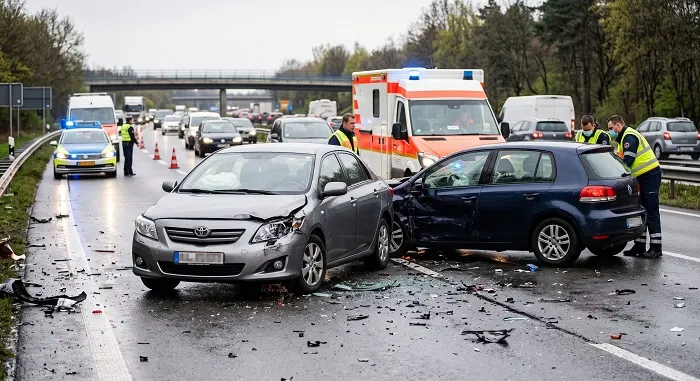
Car accident cases are the most common arena for shared-fault arguments. Texas saw over 4,000 traffic fatalities in recent years according to TxDOT crash statistics, and fault allocation played a role in thousands of those resulting civil claims.
Truck accident claims carry higher stakes because damages tend to be larger. Freight companies and their insurers often arrive with accident reconstructionists, attorneys, and claims teams, sometimes before the scene has been cleared. Coming to that table without representation puts you at a serious disadvantage.
Motorcycle and Pedestrian Accidents
NHTSA data shows motorcyclists are disproportionately represented in fatal crashes relative to their share of road traffic, a statistic defense attorneys use to reinforce the narrative that riding itself is reckless. Motorcycle accident cases face an uphill battle for a different reason: bias. Some juries assume motorcyclists take on inherent risk just by riding. Insurers know this, and they lean into it, raising questions about lane positioning, visibility, and speed to chip away at the at-fault driver's liability.
Pedestrian accident claims draw similar tactics. Was the pedestrian in a marked crosswalk? Were they looking at their phone? These questions get raised whether or not they have any real bearing on what actually happened.
Premises Liability
In a premises liability case, such as a slip and fall, with a hazardous condition left unaddressed, the property owner's insurer will argue you were somewhere you shouldn't have been, that warnings were posted, or that your own inattention caused the fall. The goal is always the same: move that fault percentage in your direction.
How Fault Gets Decided in a Texas Injury Case
Fault percentages don't appear out of thin air. They're argued, challenged, and ultimately shaped by evidence. The record that drives those arguments includes:
- Police reports — how the responding officer documented the scene and recorded each party's account. You can request your own through the Texas DPS crash report portal;
- Witness testimony — bystanders, other drivers, passengers, nearby employees;
- Physical evidence — skid marks, point of impact, vehicle damage patterns;
- Traffic and surveillance footage — increasingly available and increasingly decisive;
- Accident reconstruction analysis — used in complex cases involving high speeds or disputed timelines;
- Medical records — to establish what injuries occurred, when they appeared, and whether they're consistent with the mechanics of the crash.
In a jury trial, twelve people hear all of this and assign a fault percentage to each party. That number feeds directly into your award calculation. It's not a process you want to walk through unprepared, or without someone who knows how these arguments are constructed and how to dismantle them.
What to Do (And Not Do) After an Accident in Texas
A few things matter more than most people realize in the hours and days following a crash.
Don't give a recorded statement to the other driver's insurer without speaking to an attorney first. You're not legally required to, and doing so before you know the full picture can hand them exactly what they need to argue you share fault.
Document everything at the scene. Take photos of vehicle positions, road conditions, visible injuries, and any signage in the area. The scene changes fast, as tow trucks arrive, cars move, and witnesses leave.
Get medical attention right away. Gaps between the accident and your first medical visit are used to argue the injuries weren't serious or weren't caused by the crash. Consistent medical records are the foundation of a consistent claim.
Watch what you say on scene. "I'm sorry" (even said out of reflex) can be framed as an admission of fault. Stick to the facts when talking with police and leave the fault analysis to the investigation.
Step away from social media. It sounds overly cautious until you've seen a single post cause real damage to a legitimate claim. It's not worth it.

What Texas Comparative Fault Means for Your Injury Case
Texas modified comparative negligence is the legal landscape every injured Texan is operating in. Whether you were hurt in a car accident, a truck crash, or a fall on someone else's property, the other side is already thinking about fault percentages and how to move them.
At Applewhite Firm, I came to plaintiff-side work after years of watching how insurance companies build their cases. That background isn't theoretical, but a practical advantage when pushing back against the same arguments I once helped construct.
If fault is being disputed in your case, or if you have questions about how Texas law applies to what happened to you, schedule a free consultation. No fee to talk, no obligation to move forward. All cases are handled on a contingency basis, so you owe nothing unless we win money for you.
Worried the Insurer Is Building a Fault Case Against You?
I'll review the evidence, the adjuster's position, and how Texas comparative fault law applies to your situation — at no cost and no obligation.
Take the first step toward recovery. I'll personally evaluate your case with no obligation!

Don't Let Fault Percentages Get Decided Without You
If the other side is already building a case about who caused the crash, your side of the record matters just as much. Contact Applewhite Firm PLLC for a free review of liability, evidence, and where your claim stands under Texas law.