


Successful Cases

Fair Compensation for a Pickup Truck Injury
Despite a complex liability dispute, I secured the maximum policy limits for a client who suffered a traumatic injury after being thrown from the back of a pickup truck.
Fair Compensation for a Pickup Truck Injury
Despite a complex liability dispute, I secured the maximum policy limits for a client who suffered a traumatic injury after being thrown from the back of a pickup truck.
Car Accident Coverage Saved from False Cancellation
I won against an insurance company that tried to wrongfully deny coverage by falsifying documents, getting my client's policy reinstated and her claim paid in full.
Car Accident Coverage Saved from False Cancellation
I won against an insurance company that tried to wrongfully deny coverage by falsifying documents, getting my client's policy reinstated and her claim paid in full.
Rejected Car Accident Claim Wins Full Settlement
I overturned a liability denial on a case other lawyers rejected, securing the full policy limits for a client severely injured in a major collision.
Rejected Car Accident Claim Wins Full Settlement
I overturned a liability denial on a case other lawyers rejected, securing the full policy limits for a client severely injured in a major collision.
%20(1).avif)
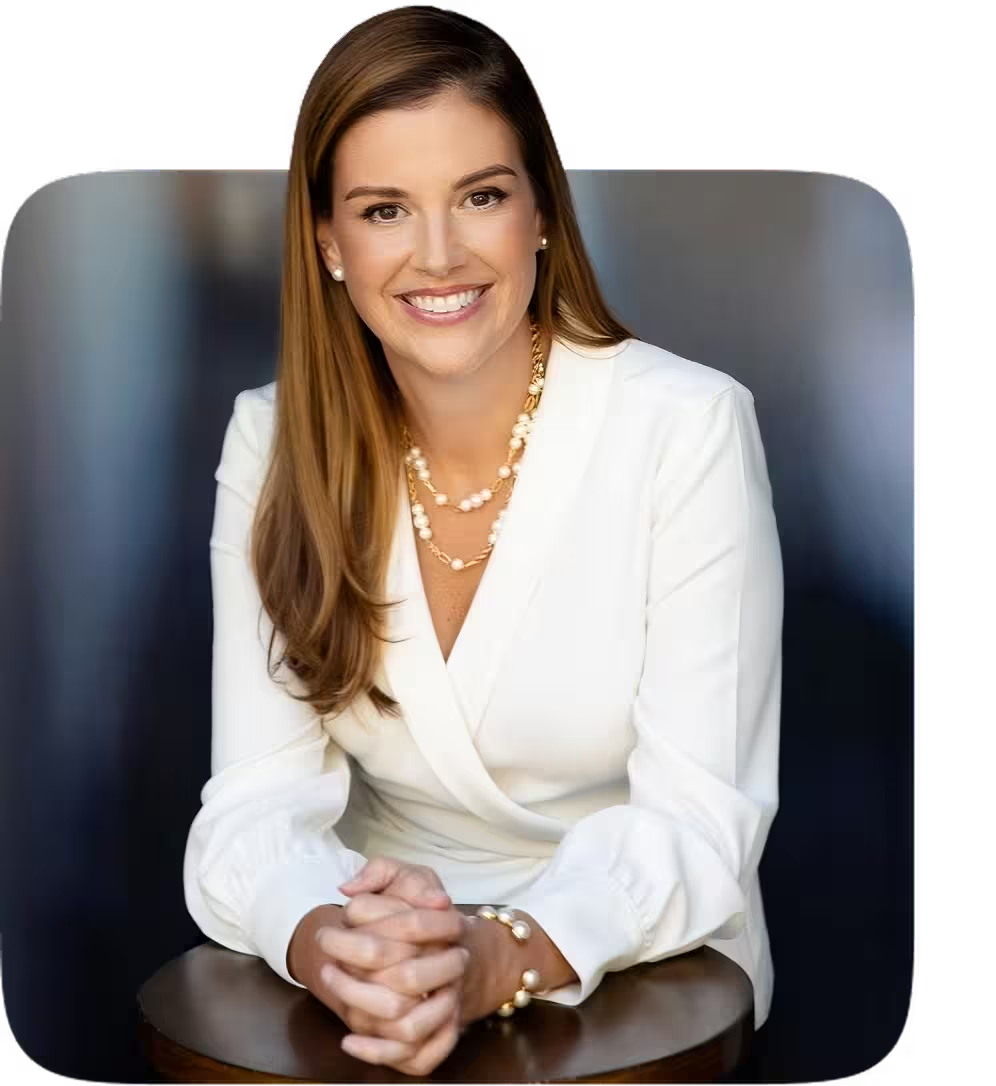
Applewhite
A Leander Motorcycle Accident Lawyer Who Works the Claim Herself
Leander has climbed by more than a third since 2020, and the traffic on 183A and US 183 has grown right along with it. For anyone on a motorcycle, more cars and more distracted drivers mean more chances to get hit through no fault of your own.
I'm Ashley Applewhite, and for years my job was defending insurance companies in exactly these cases. I sat in the meetings where a carrier decides how little it can offer and still closes a file. Now I use what I learned there for the people those same carriers try to shortchange.
Your case stays on my desk. I'm the one reading the crash report, the one arguing with the adjuster, and the one standing up in a Williamson County courtroom if it comes to that.




Motorcycle Crash Types in Leander
Most of the motorcycle cases I take on around Leander come from a driver doing something ordinary and careless. On local roads, that tends to look like:
- A left-turning car whose driver "didn't see" you at a light on US 183 or Hero Way;
- Someone drifting into your lane on the 183A toll lanes while looking at a phone;
- Rear-end hits when traffic stacks up near the Ronald Reagan and San Gabriel Parkway intersections;
- Cars pulling out of a strip-mall driveway on US 183 without a glance for a bike;
- Right-hook crashes, where a driver passes you and then turns across your path;
- Gravel, loose debris, and unfinished shoulders left by Leander's constant construction;
- Hit-and-run wrecks where the at-fault driver takes off and leaves you in the road;
- Collisions with delivery vans and box trucks servicing all the new subdivisions.
A rider has almost nothing between them and the pavement, so these wrecks rarely end with a dented fender and a handshake.
Hit While Riding in Leander? Let's Talk Today.
Tell me what happened. The call is free, and you'll be talking to me, not a screener.
What a Leander Motorcycle Crash Does to a Rider
No two motorcycle wrecks leave the same marks, but a handful of injuries come up again and again in the cases I take. The most common after a Leander crash:
- Concussions and traumatic brain injuries that change memory, focus, and mood, sometimes permanently;
- Spinal fractures and cord damage, including herniated discs and, in the hardest hits, partial or full paralysis;
- Wrists, arms, hips, and legs shattered on impact, often needing plates, screws, and more than one surgery;
- Road rash deep enough to require skin grafts, with a lasting risk of infection and scarring;
- Burn injuries from hot exhaust pipes, engine contact, or a fuel fire, painful at the surface and disfiguring when they reach deeper tissue;
- Internal bleeding and organ damage that stays hidden at the scene and can turn dangerous within hours;
- Crushed nerves, chronic pain, and amputations that reshape how a rider lives and works.
Some of these don't announce themselves until hours or days later, once the adrenaline wears off. That's why I tell every rider to get checked the same day, even one who feels like they walked away fine. A gap between the crash and your first medical visit is the first thing an insurer reaches for when it wants to argue you weren't really hurt.
.avif)
Before You Sign Anything, Call Me
Insurers count on you settling early and for too little. A quick conversation can keep that from happening.
Why Riders Choose Applewhite Firm PLLC
How I run a motorcycle case is easy to say and harder to pull off: lock down the proof early, put a fair value on what the wreck cost you, and hold the insurer to it. Here's what that means for you as my client:
.svg)
I Know How the Insurer Thinks
Adjusters price a motorcycle claim a certain way, and I know the formula because I used to run it. That tells me where they'll try to trim your case and what it takes to stop them. I've also sat through more than 500 mediations on both sides of the docket, so I can tell a fair offer from a number meant to make you go away.
.svg)
Contingency Fees Only
You owe nothing up front, and nothing at all unless I recover money for you. These cases run on a contingency fee, and I cover the costs of building them (medical records, filing fees, outside consultants) while the claim is active. If the case doesn't pay, neither do you.
.svg)
Reachable After Hours
Crashes don't clock out at five, and neither do the worries that trail them. If a question comes up late on a weeknight or over a holiday weekend, call or text and you'll hear back, not land in a queue.
.svg)
A Direct Line to Me
Call with a question and you get me, not a message taken by someone who has to look up your name first. I keep you current on what's happening and what comes next, in plain terms, so you're never left guessing where your claim stands.
The Path a Leander Motorcycle Claim Takes
The First Conversation
We start with a call. Tell me what happened in your words, and I'll tell you straight whether you have a claim worth pursuing and what could get in the way. If it isn't, I'll say so. The first read costs nothing.
The Stretch While You Heal
You heal; I handle the rest. I fix errors in the crash report, preserve your bike before it's scrapped, pull camera footage before it loops over, track your providers, and keep the adjuster from leaning on you while you're hurt.
Putting a Number on the Claim
I won't rush a demand while your prognosis is still shifting; that's how riders get shortchanged. Once recovery is clear, I tally every cost: past and future treatment, lost pay, lost earning power, and the daily toll, all backed by records.
When the Offer Comes Back Low
The first offer is usually thin. I answer it with evidence, press through negotiation and mediation, and file suit if the insurer won't budge. After 500-plus mediations and years trying Texas cases, adjusters know I don't fold.
Ready to Talk? I'm Ready to Listen.
Call Applewhite Firm PLLC and tell me about your Leander motorcycle accident. You'll get an honest read on your claim and a clear next step, whether or not you decide to hire me.
FAQs About Motorcycle Accidents from Leander Riders
The insurance company already offered me a settlement. Should I take it?
Be careful with it. An offer that shows up within days of the crash is usually the carrier trying to close your file before the true cost of your injuries is known. Once you sign, you can't reopen the claim if you need another surgery or can't get back to work. Let me measure the offer against your medical records first. More often than not, it's a fraction of what the case is worth.
What if the driver who hit me didn't have enough insurance?
That happens a lot, and it doesn't leave you stranded. Your own policy may carry uninsured or underinsured motorist coverage that pays when the at-fault driver's limits fall short or they had no coverage at all. Other policies can come into play too. I trace every source of payment before anyone assumes the money isn't there.
Do I have to give the other driver's insurer a recorded statement?
No. You're not required to give the at-fault driver's insurance company a recorded statement, and doing so usually helps them more than it helps you. Adjusters are trained to ask questions that nudge you into minimizing your injuries or accepting part of the blame. Send them to me and let me do the talking.
The adjuster says the crash was partly my fault. Is my claim dead?
Not unless they can put more than half the blame on you. Under Texas's modified comparative fault rule, you can recover as long as you're 50% or less at fault, with your award reduced by your percentage. Blaming the rider is a routine move to shrink the payout, and I build the evidence to push back on it.
How am I supposed to pay for treatment before the case settles?
You have options that don't demand cash up front. Health insurance, med-pay coverage on your auto policy, and in some situations treatment on a lien — where the provider waits to be paid out of your settlement — can keep your care going while the claim moves. I'll help you figure out which of those fits your case.
How long do I have to file after a Leander motorcycle crash?
In most Texas injury cases, two years from the date of the wreck. Miss that window and the court can toss the claim no matter how clearly the other driver was at fault. If a city or county played a role — a poorly maintained road, for instance — the notice deadline is far shorter, so it's worth calling sooner rather than later.
